



Kishi Bashi Reissues ‘Sonderlust’ To Mark 10-Year Anniversary
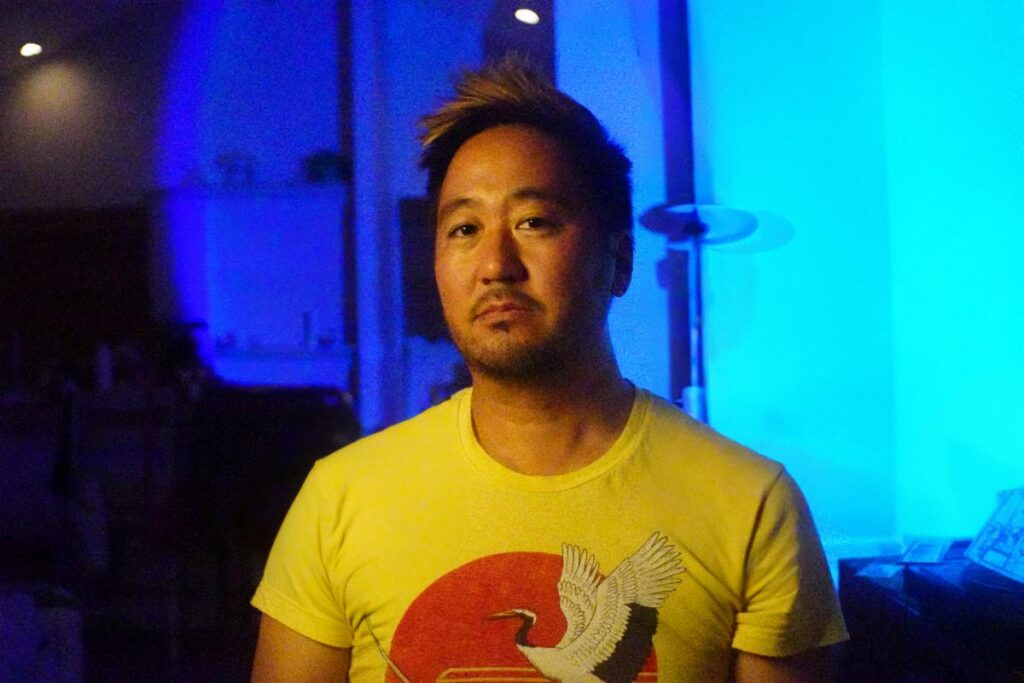
Indie rocker Kishi Bashi just announced that he’ll issue a 10th anniversary reissue of his critically acclaimed 2016 album, Sonderlust. To celebrate, he’s shared the previously unreleased B-side, “Harpsi Chords,” a gentle, harp-driven song that just didn’t fit with Sonderlust‘s other tunes. Now available for pre-order, the Sonderlust (10th Anniversary Edition) features updated artwork from Ssin Kim, the South Korean artist behind the original cover. In a recent Zoom call from his Santa Cruz, CA home, Kishi Bashi talks about the reissue.
Talk about what it has been like to revisit Sonderlust.
It’s great. I play a lot of those songs all the time. I know it’s a popular album. Revisiting some of the songs I don’t normally play has been interesting. Some of them are prog rock and kind of challenging. It’s kind of exciting. I have a great keyboard player with me. Graham Richards. He’s an old college buddy of mine. He’s fantastic. He’s like Keith Ermerson with his synthesizer. It’s going to be wild.
That’s perfect if you think the songs are prog rock.
I just realized a lot of it is proggy, especially toward the end.
You put out the previously unreleased B-side “Harpsi Chords.” What’s the story there?
I’m trying to remember why I didn’t include it. It just felt out of place. I thought it was beautiful, but I could never achieve the type of emotion I wanted, so I just left off. It had strings on it, so it was close. I had recorded strings with that track in mind. I worked on 10 or 11 songs and release 9 or 10.
Will you play it live?
I don’t know. I might save it for if I do a show with strings or an orchestra.
Talk about the updated artwork from Ssin Kim, the South Korean artist behind the original cover.
So Ssin Kim is a studio artist, and the first album cover was one of her pieces from a gallery. We licensed it It’s called Beginning of the End. It fit the theme of the songs. It’s a dystopian vision of humanity’s end. David Woodrow, an art director at Joyful Noise, found it. He’s a great artist too, and I trust him. He found it and said what about this. It was perfect. Ten years later, I love art and I thought it was appropriate to see if there were other pieces.
Prior to making the album, were you burned out after making 2013’s 151a and 2014’s Lighght?
It might have been when I peaked. The tours were getting bigger and bigger. All these opportunities were coming in, and it was straining my relationship with my family. In many ways, it’s the artist’s dream. You’re busy, but there are also consequences. That’s when I realized it was not sustainable, and I needed to take care of myself and the people around me.
Talk about what you wanted to do differently with Sonderlust?
Lighght was a wild exploration, but with Sonderlust, I wanted to focus on analog synthesizers and harpsichord and present a baroque pop fusion sound. I wanted more of a tone for the album than I have previously.
Where did you record and what was that like?
I pretty much made the demos at home. You can hear the demos on the reissue. They are pretty similar to the ones on the album. But then I went to L.A., and I worked with Chris Taylor from Grizzly Bear, who helped me find more musicians. And I worked with my drummer friend Matt Chamberlain. And I recorded the strings out there too.
Do you have go-to players for strings?
It depends on how much money I have for the album. I can do some stuff myself. Having a string section of real instruments — you can’t beat that. Los Angeles and London are the best string players out there. I have friends in Miami too.
John Koenig’s Dictionary of Obscure Sorrows provided your title. How did that happen?
John Koening is a poet. I wanted something that was poetic but maybe a little intellectual. When I was looking for a title, I found his dictionary. He creates these words that are not available to the English language. But the definitions are philosophical ideas. “Sonder” is about the realization that everyone has a unique and deep life. It gives you a sense of humility. It’s the realization that we’re all connected. Myself through my music to my listeners is a beautiful connection yet it can have its consequences. It seemed very appropriate at the time. A lot of people don’t really think about how connected we are.
How did Sonderlust impact your music that came after?
I listen back to it and I want to evolve my production. Once you get older, you have that hindsight. You can think more conceptually. It’s a snapshot of your life. Looking back, I think I did a good job of having a contained sound. For me, it’s a very dark-sounding from an audio perspective. Some people like that, and I tend to make things analog-sounding, which tends to e dark.
I suspect the music is much brighter when you play it live.
It’s going to be bright as fuck. The tempos will be faster. It’ll be like a party.
What are you working on now?
I’m always working on little ideas. I don’t have any deadlines. I have new synthesizers. I have this Jupiter X and a Korg Prologue. I have a tape machine. I’m doing stuff to stay inspired. I’ve tried finger drumming. I’m trying to get my production better. I turned 50 last year. In my next decade, I want to be a better producer and engineer.
Photo credit: Kishi Bashi
Jeff