


Singer-Songwriter Eivør Draws Upon Faroese Roots for New Album
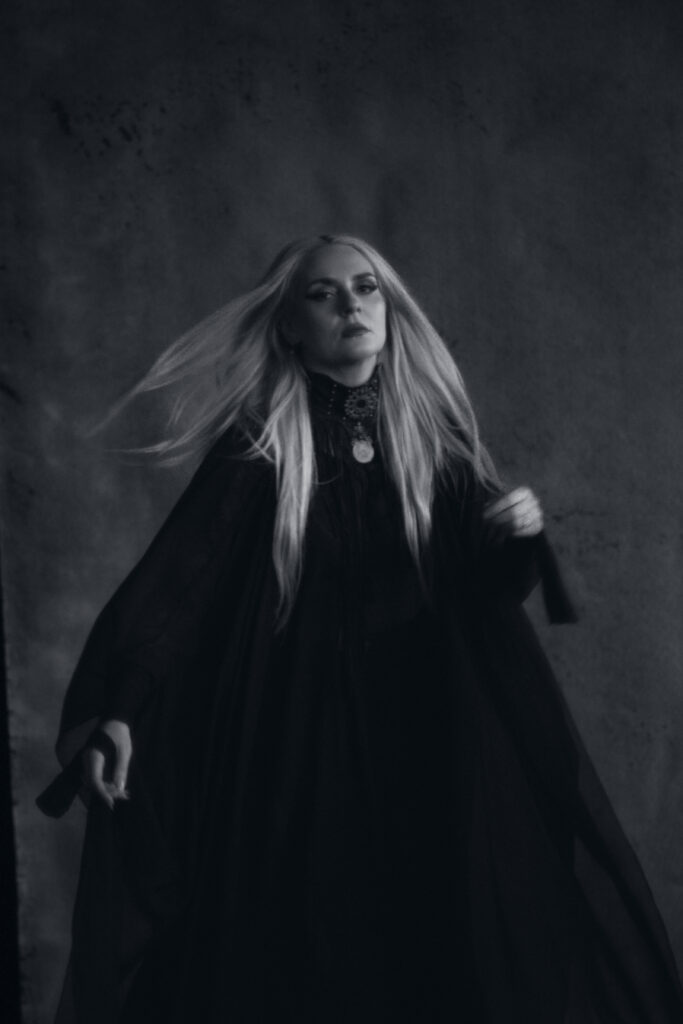
Thanks to her soundtrack work on films such as The Last Kingdom, God of War and God of War Ragnarök, singer and composer Eivør has become known outside of her native Faroe Islands home. Her new album, Tungl (“moon” in Faroese), which was recorded live with her full band in a house on the Faroe Islands, builds on the atmospheric, Dead Can Dance-like sound she has developed on previous releases. It includes Faroese influences, hypnotic rhythms, electronics and Eivør’s remarkable vocal range.
In this Zoom call from Faore Islands home, Eivør talks about both her career and the new album.
What was it like to grow up in the Faroe Islands?
It was a very peaceful childhood. I grew up in a little village called Syðrugøta. It is a village of 500 people or so and every close to the ocean and by the sea. I was a very dreamy child. I had a wild imagination.
What kind of music did you listen to?
At the beginning, I would listen to whatever was around me. It was Faroese music. Those old folk songs would become an important part of my inspiration for my own artistry. Later, when I became a teenager, I would listen to all types of music. I would listen to all kinds of music. Joni Mitchell was one of the first albums that really changed something for me.
You started singing at an early age.
Yes. I went to this singing competition when I was 13, and I won it. It was called the Singing Bird of the Year. I didn’t expect at all to win. That started a lot of waves, and I would be asked to sing at all these different arrangements. Before that, I had sung privately at family events. When I was 16, I had enough songs to make my first album and recorded it at that age. It’s been quite a journey.
What inspired you to move to Reykjavik in 2002?
I decided to go to study singing. I met this opera singer who had come to the Faroe Islands. There were not many possibilities back then for singing lessons, and I wanted to be better at it. There was so much I wanted to do with my voice but didn’t know how to. I met this incredible woman called Ólöf Kolbrún who came to give singing lessons and encouraged me. When I was 17, I moved to Reykjavik and stayed with her for the first year. That was one of those spontaneous lessons.
Talk about the new album Tungl, which translates into “moon.” When did the songs begin coming together?
About three years ago. I started to write the songs. I was in the middle of finishing another album called Enn. There were a few elements on that album that led me further me onto this album — some things that I was curious to explore more. It’s like that often for me. One album leads me to the next one. Many of them have been written on my tours. I decided to record here because I felt like it was going back to my roots. It was about going back to the beginning without being a repetition. It’s like a mix of new and old elements.
Did you intend to make the album so eclectic?
I wanted to be playful and open-minded and just let it happen. The songs came one by one and somehow started to form a pattern in my head. Most of them are Faroese, but some of them started to sound better in English so wrote them in English. It’s very organic how it all came together.
What was the recording session like?
All the bass and drums we recorded live in a house in the Faroe Islands that is shaped like an eagle. It’s roundish. It’s my friend’s house. We borrowed this house and turned it into a studio. It was a beautiful experience. It was very special and grounding. It felt really right for the themes which are about home in a sense.
“Dragon Maiden” is very majestic. What inspired it?
I wrote the melody and idea for it and later the lyric came. I always knew this was supposed to be a song about courage and some kind of hope. It’s about getting back on your feet after you fall. It’s a song about rising up again. Then, I collaborated with my friend, who’s a beautiful poet. She has this special magic that I felt this particularly song needed. She brought in the dragon maiden. That’s what the song was missing. She made my poem much more fiery and fierce. It was a fun experience.
And “Walls” is very cinematic.
For the whole album, the more cinematic and spacious moods have inspired me. I have been working quite a lot with cinematic music over the years, like for The Last Kingdom. It has inspired me and influenced the way I think my own songs as well. I like these moody, open spaces and soundscapes.
After 20 years, you have quite the catalog at this point. What is it like to make a setlist?
That’s the big challenge. We started rehearsals last week, and I have the longest setlist. It’s so hard to choose songs, especially when you make new albums and have to pick which new ones get to join the list. I like to make a live show that it feels like a journey, and the songs compliment each other. You want to take people on a journey. That’s the main goal with a setlist. I like to swap songs out. I like to make the list into some kind of shape and some songs replace each other as we tour.
Photo credit: Adam Wamsley
Jeff