


Pierce the Veil Preps for First-Ever Amphitheater Tour
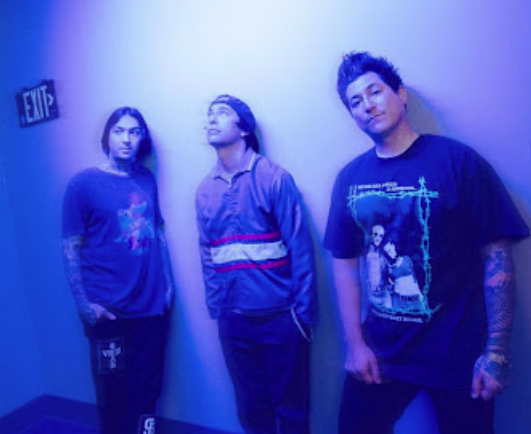
Pierce the Veil started out in 2006 as a post-hardcore band in San Diego. It played some clubs around town prior to releasing its debut album. Now, after five full-length albums, singer-guitarist Vic Fuentes, guitarist Tony Perry and bassist Jaime Preciado have risen in popularity to the point that they now rival bigger bands such as Muse and My Chemical Romance. Their 2023 album, The Jaws of Life, contained the breakthrough hit “Emergency Contact,” and the group embarks on its first headlining amphitheater tour this summer.
In a recent Zoom call from Charlotte, where the band had its first real day of full production with its crew, Fuentes speaks about The Jaws of Life, its first studio release in eight years.
When this band started out in 2006, did you ever think you’d be playing a solo headlining amphitheater tour?
I would have hoped that we could find our way here. How we would have done, I wouldn’t have known. It’s incredible. None of us really believe it. It’s unreal.
You’re playing songs from all your albums on this tour. How difficult has it been to learn the material?
It’s been really funny to research old YouTube videos from 15 years ago. It’s so embarrassing to watch and see who I thought I was on stage and what kind of character I was presenting. I was trying to figure out what works and who I was. It’s hilarious to see the different phases. It’s been cool to revisit these old songs and see them in a new light and play them as we know them now and hear them better that they’ve ever been. Wherever, we play an old song, it’s the best it’s ever sounded.
Talk about the thought process going into The Jaws of Life. I think you said you were trying to explore some different types of musical influences.
Definitely. It had been a long time since we made a record. We wanted to make whatever naturally came to us. We weren’t feeling like doing anything like what we had done before. That felt boring and old to us. We didn’t want to recreate energy from the past. We followed what was exciting to us at the moment. I was leaning into a lot of my ’90s influences. I thought that was fun to explore. I had a great time doing that.
Did you listen to a particular album from the ’90s?
I had playlists of stuff I really loved. The guitar work on Stone Temple Pilots albums is so great. It’s an overarching theme of how a lot of ’90s stuff was very simple and powerful and iconic. The riffs might not have been hard to play but they were still powerful. I didn’t want to make things too complex. I just wanted to make them powerful.
When did you start writing?
I think we wrote a little bit in 2017 after we stopped touring. We were writing as if we were going to make a record and then COVID hit, and I didn’t write at all for at least a year. Then, we got back to it, and it’s been back and forth for the past few years.
Your vocals sound better than ever.
I think I recorded 95 percent of the vocals with my bassist. We were in the studio at home and we would try to get as much done as we could and make it as good as we could. I was honestly self conscious about my singing going into the record. I hadn’t used my voice and hadn’t pushed it in years. I was trying to find my way back. I had to push myself to get it to sound like I wanted. It came out cool and I think we did the best we could.
I was struck by how high your voice sounds on “Emergency Contact.” Talk about that song a bit.
I didn’t know that it would hit the radio like it did. We thought hard on that song. Between us and Paul, we had a lot of different versions. At one point, we had three versions of the song. We were sending them to our closest friends. Paul thought the bridge needed to become the chorus. There were drastically different versions of that song. We settled on what we have. What it says it that we all believed in that song and felt strongly about it. Paul specifically thought that song would be a big song.
Did something specific trigger the concept?
I think going through COVID and difficult times and needing to lean on the people you love and really trying to find your way back to the sunlight inspired it. This whole record is about getting past the dark days. I am thinking of that moment when you see a hand pop out of the dirt or mud and it’s someone trying to claw their way out. It’s almost like a prison break.
The record was produced by Mutemath frontman Paul Meany and mixed by Adam Hawkins. Talk about what that experience was like.
This was a once-in-a-lifetime recording process. Paul Meany is born and raised in New Orleans. We liveda and recorded in an old house in the Fench Quarter. The studio was downstairs. The bedrooms were upstairs. We would just wake up and start recording. We recorded the drums and vocals at a New Orleans studio that was just a few blocks away. Third Eye Blind’s Brad Hargreaves plays drums on the album. That was such an honor to work with that guy. We felt so lucky that someone would set us up like that to make a record. It was awesome.
The Jaws of Life (Deluxe) contains two new tracks, “Kiss Me Now” and Radiohead’s “Karma Police.” Talk about those tunes.
“Kiss Me Now” was recorded in New Orleans for the record. We left it off the album because we had too many slow songs. We kept it with the intention of releasing it later. “Karma Police” was recorded later in the middle of this album cycle. We recorded it at a local studio in San Diego. We rented it out for a couple of days and did the song.
The “Karma Police” cover still sounds like Pierce the Veil.
The songs have that angst-y quality. They’re fuzzy as hell and we tried to push the distortion to a place where it was really thick but pleasant to hear. The two songs make a nice addition to the record. I’m so excited they have a place to live. I wanted to have this record of this amazing time in our career. There’s a booklet that comes with that includes photos.
Another important initiative for the band is the Living the Dream Foundation that supports music fans with terminal or life-threatening illnesses. Talk about it.
I inherited this nonprofit years ago. We’ve been building it and seeing where it goes. We worked with kids suffering from cancer and other ailments. We worked within the musician industry to find young adults and bring them to concerts and festivals to give them the VIP experience. We get access that most people don’t get. We know the industry and the tour managers and production people. We can get our guests with the band on stage and backstage. It’s such a cool thing. It’s about lifting spirits and energy. A lot of them are going through rough moments in their lives. To get them out and get their energy going and get them excited is what it’s all about.
Photo credit: Celina Kenyon
Jeff