



An Introspective Period Inspired Joy Oladokun’s New Album

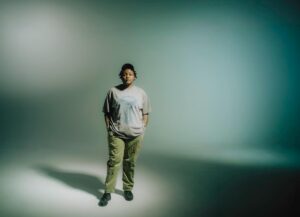
Singer-songwriter Joy Oladokun has performed at the White House as part of the Respect for Marriage Act signing ceremony as well as on many major late-night shows. Her music has been included on various TV programs and her song “i see america” was also selected as a finalist for the Recording Academy’s Special Merit Award, Best Song for Social Change.
Over the course of her career, which stretches back nearly a decade, she’s collaborated with artists such as Chris Stapleton, Brandi Carlile, Maren Morris, Jason Isbell and Noah Kahan. She literally channels her thoughts about herself and her role as an artist into her new album, Observations from a Crowded Room. Written, produced and largely performed by Oladokun alone, the album was crafted during a period of “intense introspection and questioning,” as it’s put in a press release. Oladokun speaks via phone from a recent tour stop in Mexico where she was playing as part of the Dead Ahead festival.
Are you touring as a solo act or with a band?
I have a band. Growing up, there were a few artists who I loved who would essentially open for themselves and do a 30-minute acoustic set. The band then comes out and they play more. That’s the vibe of the shows coming up. It’s a tradition that is inspiring to me and that I loved. It feels like the right mode for the past records and for this record and it gives me the opportunity to check in with people too.
You wrote Observations from a Crowded Room during a very introspective period in your life. Talk about how your personal life filtered into the songs.
I feel like something shifted over the few years that it took me some time to process. It was probably after [2023’s] Proof of Life. I think that’s why this album came out the way it did. This music is about this moment in the time where I go, “I thought I was a normal person living in Nashville, but I think I might be a musician now.” I might be a musician for work, and that’s where the introspection comes from. I thought I was just a little guy roaming around. Now, I feel this sense of purpose and this responsibility with my music and art.
Where did you go to record and what was that experience like?
I recorded most of it out of a small studio in Nashville and then I spent three days at Electric Lady. “No Country” wasn’t supposed to be on the record, but it came out of the sessions at Electric Lady. It was 3 a.m. and the engineer and I were talking about world events. All of sudden, this song came out of that discussion. Working at Electric Lady helped my confidence. I had spent so much time working on the music at home. I worked with one engineer remotely and at Electric Lady. It opened something up. I was making in the sense that Jimi Hendrix made albums in that I was using weird sounds and textures.
The album incorporates electronic beats and psychedelic rock. Talk about what you wanted to do differently with the music.
I think that working alone had its blessings and limitations. One of the blessings was that sometimes for Black music, there is a space that people want me to occupy because of the sound of my voice and because of the sounds I play. When I’m by myself, I can be a person who listens to Rage Against the Machine as much as I listen to Aretha Franklin. That also gives me language I can use when working with other people.
It starts with “Letter from a Blackbird.” I think you are the “blackbird.” Talk about the decision to start with a “letter.”
I had just finished a tour that was really, really difficult for my mental health. We were at the hotel waiting for our flights in Oregon. I had taken mushrooms and was thinking about the past two years of my life. I got signed in 2020, but over the past two years there has been this trajectory in my life. I don’t think my career has skyrocketed, but I could feel a difference in my quality of life. The way that people treated me had not changed. If anything, it was worse. I had hard experiences with security guards at venues and with fans of other people shouting things at me because they’re waiting for their favorite white guy to go on. I was sitting at this river and I wanted to write something like a response to “Blackbird,” which Paul McCartney wrote about the Civil Rights Movement. I wanted to say, “You wrote this to us. This is my experience decades later.” There are nods to “Blackbird” on this record. The strength of marginalized people is relegated to one side and people are paying attention, and I should tell them the truth about the hard things and beautiful things.
And what inspired the decision to include the various “observations”?
I mentioned that people don’t want to hear me talk; they just want to hear the songs. The music is so introspective and I know that people see themselves in the stories and it tells a story, and I wanted to talk about the emotions I’m sharing and the observations provide the context.
“Am I?” is one of my favorites. What did you want to show with the music video?
It’s cool because it’s the song is like am I alone. Is there no one to support me? The music video is me traveling around the world for work and people are listening to me play — some people better than others. It’s like I’m taking a journey around the world. I went to almost every continent in the span of one year. I wanted people to see what it means for me to do those things. It’s a contextualization that people don’t always have. Sometimes, when I complain about work people don’t understand that. They’re like, “You got to open for John Mayer.” It can still suck. I think it’s nice to be able to show that and be introspective and honest.
“Drugs” is a great country-ish tune. Have you overcome a problem with drugs?
Yes and no. I have always smoked a little weed. I love weed, and it helps my anxiety. I used to take 500 mg to play a show. Now, I take a hit from the vape pen and that’s enough for me. I was on one tour and did mushrooms the whole time. When I wrote “Drugs,” I thought, “You seem to really need this, and that’s okay. But if you didn’t have access would you break down?” I wanted to write a barnstormer about turning to drugs turning to it because I was stressed out and overworked, and I made the song fun.
I love how the album ends with “Goodbye.” What’s the story behind that tune?
My family is Nigerian. I spent a couple of summers in Nigeria with my parents and some people I knew. I’m first generation, so a lot of the people that I know are still living there. Every summer, when I would say goodbye, I knew a year would go by before I saw this person again. My parents are religious in an Edgar Allan Poe way. They talk about death. Things could end at any moment. Growing up not knowing if I would see people again gave me a real comfort with “goodbye.” I feel like “goodbye” is a way for me to say that I might get dropped by my label tomorrow and have no more songs in the tank and, it’s a way of saying if we don’t see each other again, there might be something for us on the other side.
I don’t know that I have ever met another musician from Casa Grande. What was it like to grow up there?
I loved growing up there. It was a really good experience for me aside from the some of the difficulties of being different. I liked growing up in the desert, and I think it’s really beautiful. My dad’s music taste was an inspiration, and I would listen to Paul Simon and Crosby, Stills and Nash and Fela Kuti and Jimmy Eat World, for some reason. I was taking it all in while sitting in the desert. I hear all those influences in my music.
Photo credit: Graham Tolbert
2025 Tour Dates
January 16—Minneapolis, MN—First Avenue
January 17—Chicago, IL—Thalia Hall
January 18—Detroit, MI—El Club
January 20—Louisville, KY—Headliners Music Hall
January 21—Columbus, OH—Newport Music Hall
January 22—Cleveland, OH—House of Blues
January 23—Toronto, ON—The Axis Club
January 25—Montreal, QB—Theatre Beanfield
January 26—South Burlington, VT—Higher Ground Ballroom
January 28—Portland, ME—State Theatre
January 30—New York, NY—Irving Plaza
February 1—Boston, MA—Royale
February 4—Philadelphia, PA—Union Transfer
February 7—Washington, D.C.—The Howard
February 8—Charlotte, NC—The Underground
February 11—Raleigh, NC—Lincoln Theatre
February 13—Knoxville, TN—Bijou Theatre
February 14—Atlanta, GA—Variety Playhouse
February 25—Tulsa, OK—Cain’s Ballroom
February 26—Kansas City, MO—The Truman
March 1—Denver, CO—Summit
March 3—Salt Lake City, UT—Soundwell
March 5—Seattle, WA—The Showbox
March 6—Vancouver, BC—Commodore Ballroom
March 7—Portland, OR—McMenamins Crystal Ballroom
March 9—San Francisco, CA—The Fillmore
March 12—West Hollywood, CA—Troubadour
March 13—West Hollywood, CA—Troubadour
March 16—San Diego, CA—The Observatory at North Park
March 18—Phoenix, AZ—The Van Buren
March 19—Santa Fe, NM—Meow Wolf
March 21—Dallas, TX—Studio at The Factory
March 22—Austin, TX—Scoot Inn
March 25—Birmingham, AL—Saturn
March 27—Nashville, TN—Ryman Auditorium
May 5-7—Miramar Beach, FL—Moon Crush: The Sea & ME
Jeff